Lorsque vous vous inscrivez à ce cours, vous êtes également inscrit(e) à cette Spécialisation.
Apprenez de nouveaux concepts auprès d'experts du secteur
Acquérez une compréhension de base d'un sujet ou d'un outil
Développez des compétences professionnelles avec des projets pratiques
Obtenez un certificat professionnel partageable
Il y a 6 modules dans ce cours
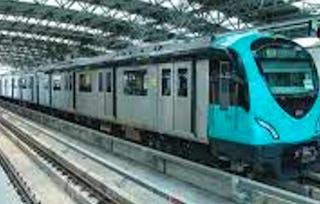
This course offers a comprehensive exploration of Mass Rapid Transit Systems (MRTS) through essential modules. Beginning with an "Introduction to MRTS," it establishes foundational principles for metro planning. The "Transit-Oriented Development (TOD)" module delves into the critical relationship between metro systems and urban development, enriched with case studies. The "Feasibility Studies" module equips participants with tools for assessing project viability. "Planning and Integration of Metro Systems" addresses challenges and strategies for coordinating various configurations. The course covers metro station planning, MEP systems imparting practical knowledge for successful metro projects and contribute to sustainable urban development and efficient public transportation.
Target Learners:
• Undergraduate students of Civil Engineering
• Post-Graduate Students of Transportation and Geotechnical Engineering
• Practicing Civil, Transportation and Geotechnical Engineers
Prerequisites:
• Geotechnical Engineering
• Fundamentals on Structural Analysis
• Basics on RCC Design
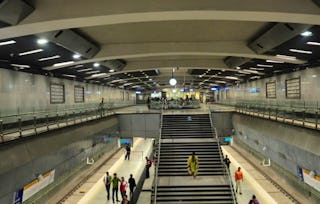
The "Introduction to Planning of Metros" module offers a thorough exploration of crucial urban transportation topics, including MRTS, Transit-Oriented Development, feasibility studies, sustainable and smart technologies, and the historical evolution of metros. This comprehensive overview equips learners with a holistic understanding of modern urban transit challenges and solutions. Focusing on essential principles for interface design, the module emphasizes urban planning intricacies, constraints, and restrictions. It delves into the seamless integration of diverse metro systems, incorporating insights on Building Information Modeling (BIM) for comprehensive planning. Learners gain valuable perspectives on optimizing metro functionality amidst urban challenges and technological advancements, fostering a well-rounded comprehension of metro planning.
Inclus
13 vidéos1 devoir
Afficher les informations sur le contenu du module
Urban Level Planning, Constraints and Restrictions•8 minutes
Planning of the Station•7 minutes
Integration of all Systems - I•10 minutes
Integration of all Systems - II•14 minutes
Building Information Modelling in Metros•4 minutes
1 devoir•Total 30 minutes
Assignment on Introduction and Planning of Metros•30 minutes
Overview of Elevated Metros
Module 2•2 heures à terminer
Détails du module
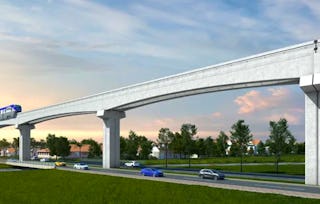
The "Overview of Elevated Metros" module provides a comprehensive exploration of key topics essential for understanding elevated metro systems. It covers alignment and span configuration, elucidating the principles guiding the layout of elevated metro viaducts. The module delves into the components of elevated metro viaducts, elevated stations, and crucial considerations in choosing the type of pier and bearing systems. It explores various superstructure types, emphasizing the Balanced Cantilever method. Detailed insights are provided on station overall layout and the loads impacting stations. This module equips learners with a well-rounded understanding of the intricacies involved in planning and constructing elevated metros.
Inclus
12 vidéos1 devoir
Afficher les informations sur le contenu du module
12 vidéos•Total 88 minutes
Alignment/Span Configuration of Elevated Structures•8 minutes
Components of Elevated Metro Via Ducts•7 minutes
Components of Elevated Station•6 minutes
Choosing the Type of Pier based on Alignment Profile•5 minutes
Bearing Systems •6 minutes
Superstructure Types & Construction in Elevated Metro •13 minutes
Balanced Cantilever Method •6 minutes
Rail/Overhead Equipment Mast •5 minutes
Station Overall Layout •5 minutes
Loads -1 •11 minutes
Loads -2 •8 minutes
Loads -3•8 minutes
1 devoir•Total 30 minutes
Assignment on Overview of Elevated Metros•30 minutes
Construction of Elevated Metros
Module 3•2 heures à terminer
Détails du module
The "Construction of Elevated Metros" module provides a comprehensive exploration of crucial topics essential for executing elevated metro projects. It begins by addressing soil conditions and foundation types, guiding learners in selecting appropriate substructure systems. The module then delves into precast mould development, offering insights into formwork systems overview and design. Precast erection methods and launching techniques are thoroughly examined, providing practical knowledge for constructing elevated metro viaducts. The module concludes by exploring obligatory span construction, ensuring participants gain a holistic understanding of the construction processes involved in executing elevated metro projects, from foundation considerations to advanced precast construction methods.
Inclus
15 vidéos1 devoir
Afficher les informations sur le contenu du module
15 vidéos•Total 95 minutes
Soil Condition and Type of Foundations - Pile/Open•5 minutes
Substructure System - Pier/Pier Cap•9 minutes
Station Foundation & Substructure and Pier Arm •3 minutes
Pier Arm/Spine Wing/Cantilever and Platform- Precast •5 minutes
Challenges in Metro Construction•4 minutes
Precast Structures a Solution for Urban Infrastructure Construction •4 minutes
Precast Yard Development •3 minutes
Types of Precast Super Structure and Different Kinds of Precast Moulds •3 minutes
Different Kinds of Precast Moulds •4 minutes
Precast Mould Development•2 minutes
Cast-in Situ Construction in Metros•2 minutes
Formwork System Overview and Design •22 minutes
Introduction to Precast Erection •12 minutes
Launching Methods •9 minutes
Obligatory Span Overview and Construction Methodology •7 minutes
1 devoir•Total 30 minutes
Assignment on Construction of Elevated Metros •30 minutes
Construction of Underground Metro
Module 4•2 heures à terminer
Détails du module
The "Construction of Underground Metros" module provides a comprehensive exploration of critical topics essential for executing underground metro projects. It begins by examining earth retaining systems, encompassing secant pile walls, contiguous pile walls, soldier piles, and diaphragm walls, offering insights into selecting appropriate retaining methods for varied soil conditions. The module then delves into tunnel construction methods, including cut and cover, drill and blast, and bored methods like NATM (New Austrian Tunneling Method) and NMT (Non-Traditional Tunneling). Learners gain practical knowledge in constructing underground metros, covering a spectrum from earth retaining structures to diverse tunneling techniques, ensuring a well-rounded understanding of underground metro construction complexities.
Inclus
11 vidéos1 devoir
Afficher les informations sur le contenu du module
11 vidéos•Total 95 minutes
Types of Earth Retaining Structures - I•12 minutes
Types of Earth Retaining Structures - II•3 minutes
Types of Earth Retaining Structures - III•6 minutes
Diaphragm Wall Analysis - I•8 minutes
Diaphragm Wall Analysis - II•10 minutes
Diaphragm Wall Analysis - III•13 minutes
Diaphragm Wall Analysis - IV•11 minutes
Diaphragm Wall Analysis - V•5 minutes
Diaphragm Wall Design•4 minutes
Underground Stations and its Configurations•12 minutes
Tunneling Methods and Techniques •12 minutes
1 devoir•Total 30 minutes
Assignment on Construction of Underground Metro•30 minutes
MEP Systems in Metros
Module 5•1 heure à terminer
Détails du module
This module offers a comprehensive overview of critical components in metro systems. It covers HVAC systems, Tunnel ventilation systems, Public health engineering aspects, electric systems, Fire safety, alarms, prevention, and emergency response. Overall, the module provides a thorough understanding of the intricate systems and safety measures integral to the efficient functioning and well-being of metro systems.
Inclus
7 vidéos1 devoir
Afficher les informations sur le contenu du module
7 vidéos•Total 53 minutes
HVAC Systems •7 minutes
Tunnel Ventilation System •4 minutes
Fire Protection System •8 minutes
Public Health Engineering•7 minutes
Electrical System - I•8 minutes
Electrical System -II•7 minutes
Fire Alarm System •13 minutes
1 devoir•Total 30 minutes
Assignment on MEP Systems in Metros •30 minutes
Future Trends in Transportation
Module 6•1 heure à terminer
Détails du module
This module, addressing the Emerging Trends in Metro Systems, it explores futuristic technologies in transportation infrastructure, including Maglevs, Vactarian trains, Hyperloop, and the advent of flying taxis.
Inclus
7 vidéos1 devoir
Afficher les informations sur le contenu du module
7 vidéos•Total 40 minutes
Automated Guideway Transit Systems•6 minutes
Suspended Railway/Monorail•7 minutes
High Speed Rail•7 minutes
Semi High Speed Rail•5 minutes
Maglev Trains History (1968 to Current)•5 minutes
Vactrain History, Development and Technology•3 minutes
Future Transit Systems•7 minutes
1 devoir•Total 30 minutes
Assignment on Future Trends in Transportation •30 minutes
Obtenez un certificat professionnel
Ajoutez ce titre à votre profil LinkedIn, à votre curriculum vitae ou à votre CV. Partagez-le sur les médias sociaux et dans votre évaluation des performances.
Larsen & Toubro popularly known as L&T is an Indian Multinational conglomerate. L&T has over 8 decades of expertise in executing some of the most complex projects including the World's tallest statue - the Statue of Unity. L&T has a wide portfolio that includes engineering, construction, manufacturing, realty, ship building, defense, aerospace, IT & financial services. L&T EduTech is a e learning platform within the L&T Group, that offers courses that are curated & delivered by industry experts.
In the world of engineering and technology, change and advancements are happening at the speed of light. Academia needs to keep pace with this change and career professionals need to adapt. This is the need gap L&T EduTech will fill. The vision for L&T EduTech is to be the bridge between academia and industry, between career professionals and ever-changing technology. L&T EduTech firmly believes that, only when these need gaps are filled, will we have truly empowered and knowledgeable workforce that will lead India in the future.
OK
En savoir plus sur Environmental Science and Sustainability
Pour quelles raisons les étudiants sur Coursera nous choisissent-ils pour leur carrière ?
Felipe M.
Étudiant(e) depuis 2018
’Pouvoir suivre des cours à mon rythme à été une expérience extraordinaire. Je peux apprendre chaque fois que mon emploi du temps me le permet et en fonction de mon humeur.’
Jennifer J.
Étudiant(e) depuis 2020
’J'ai directement appliqué les concepts et les compétences que j'ai appris de mes cours à un nouveau projet passionnant au travail.’
Larry W.
Étudiant(e) depuis 2021
’Lorsque j'ai besoin de cours sur des sujets que mon université ne propose pas, Coursera est l'un des meilleurs endroits où se rendre.’
Chaitanya A.
’Apprendre, ce n'est pas seulement s'améliorer dans son travail : c'est bien plus que cela. Coursera me permet d'apprendre sans limites.’
When will I have access to the lectures and assignments?
To access the course materials, assignments and to earn a Certificate, you will need to purchase the Certificate experience when you enroll in a course. You can try a Free Trial instead, or apply for Financial Aid. The course may offer 'Full Course, No Certificate' instead. This option lets you see all course materials, submit required assessments, and get a final grade. This also means that you will not be able to purchase a Certificate experience.
What will I get if I subscribe to this Specialization?
When you enroll in the course, you get access to all of the courses in the Specialization, and you earn a certificate when you complete the work. Your electronic Certificate will be added to your Accomplishments page - from there, you can print your Certificate or add it to your LinkedIn profile.
Is financial aid available?
Yes. In select learning programs, you can apply for financial aid or a scholarship if you can’t afford the enrollment fee. If fin aid or scholarship is available for your learning program selection, you’ll find a link to apply on the description page.