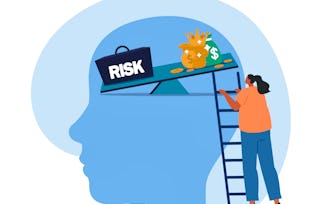
In today’s complex professional environments, ethical decision-making is essential for long-term success and effective leadership. This course dives deep into the psychological and social factors that shape our ethical judgments and behaviors. You'll explore how biases and stereotypes influence decisions, discover the power of social norms and conformity, and examine the crucial role emotions play in ethical reasoning. Additionally, you'll learn about the nuanced effects of power and status on ethical actions, including how to manage power responsibly and effectively.

您将获得的技能
- Ethical Standards And Conduct
- Social Impact
- Social Skills
- Business Ethics
- Empathy & Emotional Intelligence
- Strategic Leadership
- Empathy
- Decision Making
- Influencing
- Personal Integrity
- Psychology
- Leadership
- Compassion
- Culture Transformation
- Emotional Intelligence
- Social Sciences
- Trustworthiness
- Organizational Leadership
- Professionalism
- Sociology
- 技能部分已折叠。显示 10 项技能,共 20 项。
要了解的详细信息

添加到您的领英档案
4 项作业
了解顶级公司的员工如何掌握热门技能

该课程共有4个模块
In this module, learners explore the cognitive foundations of social biases by examining stereotypes and situational influences on behavior. Through an exploration of stereotypes as schemas, learners will uncover how cognitive shortcuts shape judgments, social perceptions, and ethical decision-making. Students will also investigate the impact of situational forces on behavior, confronting the pervasive influence of stereotypes, the fundamental attribution error, and empathy gaps. By exploring the balance between cognitive efficiency and ethical accuracy, learners will critically assess their own decision-making processes in social contexts.
涵盖的内容
12个视频1个作业3个讨论话题
In Module 2, learners explore the profound effects of social influence on ethical decision-making and behavior. This module examines conformity and compliance, uncovering the subtle ways that social norms, behavioral contagion, and interpersonal pressures shape ethical actions. Students learn how individuals often underestimate the power of social influences, leading to unintended ethical compromises, and discover strategies to resist unethical conformity and compliance in their daily lives.
涵盖的内容
9个视频1个作业3个讨论话题
Module 3 explores the crucial role of emotions in ethical decision-making and moral judgments. This module addresses how moral emotions—including other-condemning emotions (like anger, disgust, contempt), other-suffering emotions (empathy, compassion), other-praising emotions (gratitude, awe, elevation), and self-conscious emotions (guilt, shame, pride, embarrassment)—influence ethical behavior. Students will examine how moral decisions often arise from intuitive, emotional responses rather than pure rational reasoning, and how recognizing these emotional influences can enhance ethical behavior and interpersonal understanding.
涵盖的内容
9个视频1个作业3个讨论话题
Module 4 examines how power and status influence ethical behavior, exploring when and why power leads individuals toward ethical or unethical actions. Students will understand the relational nature of power, the distinction between power and status, and the psychological effects that holding power can produce. This module delves into scenarios where power corrupts or empowers, and explores strategies to wield power responsibly and ethically.
涵盖的内容
8个视频1个作业3个讨论话题
位教师

人们为什么选择 Coursera 来帮助自己实现职业发展

Felipe M.

Jennifer J.

Larry W.

Chaitanya A.
从 Business 浏览更多内容

University of Pennsylvania

University of Lausanne

SkillUp

University of Illinois Urbana-Champaign