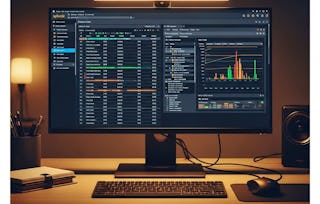
Learners will analyze, enrich, and automate Splunk data using knowledge objects, field extractions, workflows, and alerting mechanisms to transform raw machine data into actionable insights. By the end of this course, learners will be able to standardize data using information models, enrich events with lookups and calculated fields, structure unstructured logs through advanced extraction techniques, and design alerts and workflows that support proactive monitoring and investigation.

Analyze and Automate Data Using Splunk Knowledge Objects

您将学到什么
Enrich and standardize Splunk data using knowledge objects, lookups, and calculated fields.
Extract structured fields from unstructured logs using advanced Splunk extraction techniques.
Design alerts and workflows to automate monitoring, investigation, and operational response.
您将获得的技能
要了解的详细信息

可分享的证书
添加到您的领英档案
作业
16 项作业
授课语言:英语(English)
最近已更新!
February 2026
了解顶级公司的员工如何掌握热门技能

该课程共有4个模块
This module introduces Splunk knowledge objects and explains how they enhance indexed data through standardization, permissions, and lookup mechanisms to enable consistent and scalable data analysis.
涵盖的内容
9个视频4个作业
This module focuses on enriching Splunk data through field aliases, calculated fields, and advanced field extraction techniques using regex and delimiters.
涵盖的内容
9个视频4个作业
This module explores delimiter-based extractions and workflow actions that enable interactive investigation and contextual integration with internal and external systems.
涵盖的内容
9个视频4个作业
This module covers event classification, visualization, and alerting mechanisms that transform Splunk data into actionable intelligence using tags, event types, patterns, and alerts.
涵盖的内容
10个视频4个作业


人们为什么选择 Coursera 来帮助自己实现职业发展

Felipe M.
自 2018开始学习的学生
''能够按照自己的速度和节奏学习课程是一次很棒的经历。只要符合自己的时间表和心情,我就可以学习。'

Jennifer J.
自 2020开始学习的学生
''我直接将从课程中学到的概念和技能应用到一个令人兴奋的新工作项目中。'

Larry W.
自 2021开始学习的学生
''如果我的大学不提供我需要的主题课程,Coursera 便是最好的去处之一。'

Chaitanya A.
''学习不仅仅是在工作中做的更好:它远不止于此。Coursera 让我无限制地学习。'