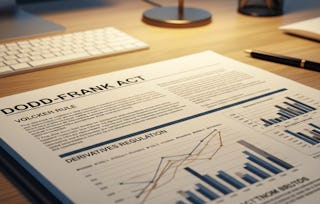
Welcome to the Economics of Reforms and Regulation course! By the end of this course, you will understand the economics of reforms and regulation, with a focus on contemporary issues and debates. You will be introduced to the rationale for an economic role of the government viz-a-viz imperfections in the real markets and inform them of some of the dimensions of the debate on state-market dichotomy. You will learn to recognize good regulatory practices by carefully considering regulatory structures across the globe. Instruments of regulation, both economic and social, are investigated using examples and case studies from various sectors. In particular, the course examines reforms in the public procurement and financial sector, and regulatory frameworks in the energy sector and will inform you of the need to revisit antitrust laws in the new-economy industries. You will also be able to peek into regulatory designs that were ground-breaking in their use of behavioral economics, new auction formats, and calls for similar creativity in formulating regulations as the world becomes radically uncertain. Lastly, you will be able to re-examine the role of the state taking cognizance of non-traditional views, specifically those from the field of New Institutional Economics, the idea of a Developmental State, and Mariana Mazzucato’s idea of an entrepreneurial state.

Economics of Reforms and Regulations

推荐体验
推荐体验
初级
Students must have completed an introductory course in the principles of Microeconomics/Economics.
推荐体验
推荐体验
初级
Students must have completed an introductory course in the principles of Microeconomics/Economics.
您将学到什么
Explain the economic rationale for reforms and regulations in different market settings.
Evaluate the impact of several types of regulatory policies on market outcomes and social welfare.
Examine the effectiveness of the regulatory policies in various contexts.
Recognize the need for unconventional wisdom in assessing the role of the State and its instruments of reforms and regulation.
要了解的详细信息

添加到您的领英档案
25 项作业
September 2025
了解顶级公司的员工如何掌握热门技能

该课程共有7个模块
In this module, you will be introduced to a few known fundamentals of welfare economics, delineating efficient outcomes of a “perfectly competitive” market, albeit under strong assumptions. Through a simple market experiment, you will be able to learn that competitive equilibrium is a good predictor of price and quantity even if we assume weaker conditions. This module will answer some of the obvious questions such as why governments intervene in markets, and what are some of the reasonable grounds for governments to intervene in markets. To answer these questions, this module examines real markets that are “imperfect” and therefore unable to produce, consume, or distribute in accordance with what is best for everyone. Lastly, this module characterizes some of the dimensions of the debate on state-market dichotomy, both in the context of free-market advocacy and in the light of historical evidence of government failures across the world. The need for developing a mutually supportive system for market and non-market institutions is emphasized upon.
涵盖的内容
10个视频7篇阅读材料4个作业1个插件
10个视频• 总计76分钟
- Course Introduction• 4分钟
- Invisible Hand in a Classroom: Pit Market Experiment • 7分钟
- Assumptions Underlying the Fundamental Theorems of Welfare Economics• 8分钟
- Barriers to Entry • 7分钟
- Differentiated Goods • 7分钟
- Spillover Effects • 8分钟
- Public Production • 8分钟
- Imperfect Information • 10分钟
- Government Failures in Development • 10分钟
- Balancing Public and Private Sector • 8分钟
7篇阅读材料• 总计205分钟
- Course Overview• 10分钟
- Essential Reading: Efficiency of Markets• 30分钟
- Recommended Reading: Efficiency of Markets• 15分钟
- Essential Reading: When Markets Are Not-So-Perfect• 40分钟
- Recommended Reading: When Markets Are Not-So-Perfect• 30分钟
- Essential Reading: Market Versus State: The Dichotomy and Beyond• 40分钟
- Recommended Reading: Market Versus State: The Dichotomy and Beyond• 40分钟
4个作业• 总计90分钟
- Efficiency of Markets• 6分钟
- When Markets Are Not-So-Perfect• 15分钟
- Market Versus State: The Dichotomy and Beyond• 9分钟
- Graded Quiz: Economic Role of the Government • 60分钟
1个插件• 总计15分钟
- Opt for Slower Track and Opt-in Missed Courses• 15分钟
In this module, you will gain an understanding of the regulatory institutions and structures that exist to facilitate the functioning of markets while protecting larger social interests. You will be introduced to the role of economic regulation in promoting competition, consumer protection, and economic efficiency.
涵盖的内容
9个视频4篇阅读材料3个作业
9个视频• 总计85分钟
- What are “Good” Economic Regulatory Systems? • 10分钟
- Centralized and Decentralized Regulation • 10分钟
- Self-Regulation vs. Delegated (to an Independent Agency / Government Branch) Regulation • 9分钟
- Accountability of Regulatory Systems• 9分钟
- Competition Law • 10分钟
- Public Ownership • 9分钟
- Price and Quantity Regulations • 11分钟
- Regulation Through Tax or Subsidies • 9分钟
- Competitive Public Franchising • 10分钟
4篇阅读材料• 总计140分钟
- Essential Reading: Regulatory Structures and Processes• 40分钟
- Recommended Reading: Regulatory Structures and Processes• 20分钟
- Essential Reading: Regulatory Instruments or Legal Forms • 40分钟
- Recommended Reading: Regulatory Instruments or Legal Forms• 40分钟
3个作业• 总计90分钟
- Regulatory Structures and Processes• 12分钟
- Regulatory Instruments or Legal Forms• 18分钟
- Graded Quiz: Economic Regulations: Institutions and Structures• 60分钟
This module focuses on the roles and functions of regulatory institutions in ensuring public health, safety, and environmental protection, as well as the legal and policy frameworks that guide their decision-making processes. In this module, you will be introduced to policy assessment tools offered in cost-benefit analysis with more emphasis upon non-market valuations. The module concludes with discussions on some known (and some not so) regulatory instruments that are used to lower environmental pollution.
涵盖的内容
9个视频4篇阅读材料4个作业
9个视频• 总计86分钟
- Overview of Health, Safety, and Environmental Regulations • 9分钟
- Regulatory Quality and Covid-19 • 9分钟
- Measuring Nonmonetized Costs and Benefits• 10分钟
- Contingent Valuation • 9分钟
- Legal Liability• 9分钟
- Command and Control• 10分钟
- Green Taxation • 9分钟
- Emission Standards: Tradable and Non-Tradable • 10分钟
- New Approaches: Voluntary Agreements, Corporate Social Responsibility, and Information as an Instrument • 11分钟
4篇阅读材料• 总计140分钟
- Essential Reading: Regulating Health, Safety, and Environment • 40分钟
- Essential Reading: Valuing Life, Time, and the Environment • 20分钟
- Recommended Reading: Valuing Life, Time, and the Environment • 40分钟
- Essential Reading: Instruments of Environmental Regulation • 40分钟
4个作业• 总计90分钟
- Regulating Health, Safety, and Environment • 6分钟
- Valuing Life, Time, and the Environment • 6分钟
- Instruments of Environmental Regulation • 18分钟
- Graded Quiz: Social Regulations: In Health, Safety, and Environment• 60分钟
This module will introduce you to major regulatory policies and reforms in the public finance sector, specifically those undertaken in the banking sector and in public procurement processes. The module stresses upon the need for good quality regulation in the banking sector which is significant to the financial systems and the health of the economy as a whole. You will also be able to learn the workings of public procurement systems and how governments need to prioritize reducing corruption in public purchases of goods and services by implementing efficient and competitive designs.
涵盖的内容
8个视频4篇阅读材料3个作业
8个视频• 总计76分钟
- Rationale for Regulation in the Financial Sector• 9分钟
- Types of Government Intervention and Regulation• 11分钟
- Case Study 1: The Dodd-Frank Act of 2010 (U.S.) • 10分钟
- Case Study 2: NARCL-IDRCL (India) and Other “Bad” Banks• 9分钟
- Understanding Public Procurement Processes • 10分钟
- Using a Reverse Auction• 8分钟
- Preventing Corruption in Public Procurement• 9分钟
- Quality-Oriented Designs • 10分钟
4篇阅读材料• 总计100分钟
- Essential Reading: Financial Sector Reforms • 20分钟
- Recommended Reading: Financial Sector Reforms • 20分钟
- Essential Reading: Reforms in Public Procurement • 40分钟
- Recommended Reading: Reforms in Public Procurement • 20分钟
3个作业• 总计90分钟
- Financial Sector Reforms• 15分钟
- Reforms in Public Procurement • 15分钟
- Graded Quiz: Key Sectors Reforms-I• 60分钟
In this module, you will be introduced to the key reforms and regulations in the energy sector and in new economy industries. Beginning with various policy instruments that are used to regulate the energy sector, the module also discusses the rationale for government intervention in energy and examines power regulations in the UK, following privatization. You will also be introduced to the meaning and importance of the new economy and the need for government regulations to adapt in the context of technological revolutions in data mining and communications.
涵盖的内容
8个视频3篇阅读材料3个作业
8个视频• 总计64分钟
- Types of Government Interventions in the Energy Sector • 7分钟
- Why Regulate Energy Markets? • 9分钟
- Utility Regulations Through Price Caps • 8分钟
- Insights from UK's Energy Regulations• 8分钟
- What Do We Understand by the New Economy? • 7分钟
- Antitrust Issues in the New Economy • 7分钟
- Monopolization Practices and Big Data • 8分钟
- Case Study: Google • 9分钟
3篇阅读材料• 总计80分钟
- Essential Reading: Energy Sector Reforms• 40分钟
- Recommended Reading: Energy Sector Reforms• 20分钟
- Essential Reading: Regulations in the New Economy • 20分钟
3个作业• 总计90分钟
- Energy Sector Reforms• 15分钟
- Regulations in the New Economy • 15分钟
- Graded Quiz: Key Sectors Reforms-II• 60分钟
In this module, you will gain insights into regulatory frameworks that were innovative in their use of techniques and insights from behavioral economics and novel auction formats. The module emphasizes the need for regulators to adopt similarly inventive approaches to regulation as the world becomes radically uncertain.
涵盖的内容
7个视频4篇阅读材料4个作业
7个视频• 总计51分钟
- What Is Behavioral Economics? • 7分钟
- Bounded Rationality and Loss Aversion • 7分钟
- Regulate Through Behavioral Nudges • 7分钟
- Understanding Radical Uncertainty • 7分钟
- Monetary Policy in the World of Radical Uncertainty • 8分钟
- Spectrum Auctions• 7分钟
- Incentive Auction: A Novel Design for a Novel Process • 8分钟
4篇阅读材料• 总计100分钟
- Essential Reading: Regulatory Policy Using Behavioral Economics • 30分钟
- Recommended Reading: Regulatory Policy Using Behavioral Economics • 20分钟
- Essential Reading: Regulations Under Radical Uncertainty • 20分钟
- Essential Reading: Auction Design and Resource Allocation • 30分钟
4个作业• 总计90分钟
- Regulatory Policy Using Behavioral Economics • 15分钟
- Regulations Under Radical Uncertainty • 6分钟
- Auction Design and Resource Allocation • 9分钟
- Graded Quiz: Thinking "Out-of-the-Box"• 60分钟
This module discusses the role of the state through two alternative thought processes that challenge the conventional views offered in mainstream economics. One through the lens of a subdiscipline of economics called “New Institutional Economics” and the other through the lens of “the Entrepreneurial State” as developed by Mariana Mazzucato. In a similar vein, the idea of a developmental state is explored where the state takes a more active role and pursues industrial policies.
涵盖的内容
9个视频1篇阅读材料4个作业
9个视频• 总计56分钟
- The Developmental State of Japan and South Korea• 6分钟
- Developmental State vs. Regulatory State• 6分钟
- Coase and Transactions Costs• 6分钟
- Antitrust Regulation and Transaction Cost Economics• 6分钟
- Kodak Antitrust Case• 8分钟
- Role of Technology and Innovation in Economic Growth • 7分钟
- The Entrepreneurial State as the Lead Risk Taker and Market Shaper • 7分钟
- Pushing, Not Nudging, a Green Revolution • 7分钟
- Course Wrap-Up• 2分钟
1篇阅读材料• 总计60分钟
- Essential Reading: Rethinking the Role of the State• 60分钟
4个作业• 总计90分钟
- The Developmental State • 12分钟
- New Institutional Economics (NIE) • 9分钟
- Marianna Mazzucato’s “Entrepreneurial State” • 9分钟
- Graded Quiz: Rethinking the Role of the State• 60分钟
攻读学位
课程 是 O.P. Jindal Global University提供的以下学位课程的一部分。如果您被录取并注册,您已完成的课程可计入您的学位学习,您的学习进度也可随之转移。
攻读学位
课程 是 O.P. Jindal Global University提供的以下学位课程的一部分。如果您被录取并注册,您已完成的课程可计入您的学位学习,您的学习进度也可随之转移。
O.P. Jindal Global University
M.A. in Public Policy
学位 · 24 - 36 months
必须成功申请并注册。资格要求适用。各院校会根据您现有的学分情况,确定完成本课程后可计入学位要求的学分。单击特定课程了解更多信息。
位教师

提供方

提供方

O.P. Jindal Global University is recognised as an Institution of Eminence by the Ministry of Education, Government of India. It is also ranked the No. 1 Private University in India in the QS World University Rankings 2021. The university has 9000+ students across 12 schools that offer 52 degree programs. The university maintains a 1:9 faculty-student ratio. It is a research-intensive university, deeply committed to institutional values of interdisciplinary and innovative learning, pluralism and rigorous scholarship, globalism, and international engagement.
人们为什么选择 Coursera 来帮助自己实现职业发展

Felipe M.

Jennifer J.

Larry W.

Chaitanya A.
从 Social Sciences 浏览更多内容
 I
IIE Business School
课程
 P
PParsons School of Design, The New School
课程
 I
IIndian Institute for Human Settlements
课程