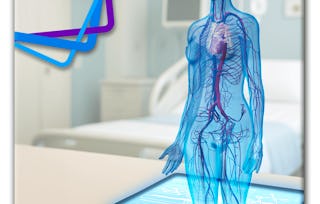
This course explores how the respiratory system facilitates breathing and gas exchange, ensuring oxygen delivery and carbon dioxide removal.
Breath of Life: Exploring the Respiratory System

Breath of Life: Exploring the Respiratory System


位教师:Hilary Gupte
访问权限由 New York State Department of Labor 提供
2,010 人已注册
您将学到什么
Learners will examine the key structures of the respiratory system and their functions
Learners will understand how oxygen and carbon dioxide are exchanged in the lungs
Learners will apply respiratory knowledge to case studies, such as asthma and COPD
您将获得的技能
要了解的详细信息

可分享的证书
添加到您的领英档案
作业
19 项作业
授课语言:英语(English)
了解顶级公司的员工如何掌握热门技能

积累特定领域的专业知识
本课程是 Interactive 3D Anatomy & Physiology: A Gamified Experience 专项课程 专项课程的一部分
在注册此课程时,您还会同时注册此专项课程。
- 向行业专家学习新概念
- 获得对主题或工具的基础理解
- 通过实践项目培养工作相关技能
- 获得可共享的职业证书

该课程共有5个模块
This module introduces the respiratory system, highlighting its essential role in maintaining life by providing oxygen to the body and removing carbon dioxide. Students will explore the anatomy of both the upper and lower respiratory tracts, including key structures like the nose, throat, larynx, trachea, and lungs. The module emphasizes how these structures work together to ensure smooth airflow and efficient gas exchange. Through detailed lessons, learners will gain an understanding of how the respiratory system filters, warms, and moistens air, while protecting the body from harmful substances. The role of the lungs and thoracic cavity in breathing mechanics will also be explored, providing a comprehensive foundation for understanding the respiratory system's structure and function.
涵盖的内容
4个视频4个作业
This module explores the essential processes involved in the exchange of gases within the respiratory system. It begins by examining the structure of the airway passages and alveoli, highlighting their design for efficient oxygen delivery and carbon dioxide removal. The mechanisms driving gas exchange in the alveoli are explained, focusing on diffusion and the role of blood capillaries. The module also delves into how the respiratory system helps maintain pH balance by regulating carbon dioxide levels in the blood, ensuring the body stays in homeostasis. Finally, the integration of the respiratory and circulatory systems is discussed, emphasizing their partnership in oxygen transport and waste elimination to sustain cellular functions.
涵盖的内容
4个视频5个作业
This module examines how the respiratory system interacts with other body systems to support overall health and maintain homeostasis. Key areas of focus include its partnership with the cardiovascular system in oxygen delivery and carbon dioxide removal, its regulation by the nervous system to adapt to changing oxygen demands, and its critical role in energy production through cellular respiration. Additionally, learners will explore how the respiratory system serves as a frontline defense against pathogens, contributing to the body’s immune response. By understanding these interconnections, learners will gain a comprehensive view of how the respiratory system integrates with other physiological processes to sustain life.
涵盖的内容
4个视频5个作业
This module focuses on the physiological processes involved in breathing and how various factors influence its efficiency. Learners will explore the mechanics of inhalation and exhalation, including the roles of the diaphragm and intercostal muscles in creating pressure changes within the lungs. Key concepts such as lung compliance, elasticity, and surfactant production are discussed to illustrate how these properties support efficient breathing. The impact of airway resistance on airflow and conditions that can alter it are also covered. Finally, external factors such as altitude, posture, and environmental pollutants are analyzed to understand how breathing mechanics adapt to different situations. This comprehensive understanding of breathing mechanics highlights their importance in maintaining effective gas exchange and overall respiratory health.
涵盖的内容
5个视频5个作业
This lesson uses five case studies to illustrate common respiratory disorders and their impact on breathing and gas exchange. Conditions include asthma (airway narrowing), pulmonary fibrosis (stiffened lung tissue), pneumonia (fluid-filled alveoli), pulmonary embolism (blocked blood flow), and sleep apnea (breathing interruptions during sleep). Each case highlights the causes, symptoms, and management strategies, connecting theoretical knowledge to real-world clinical scenarios.
涵盖的内容
5个视频
获得职业证书
将此证书添加到您的 LinkedIn 个人资料、简历或履历中。在社交媒体和绩效考核中分享。
提供方
人们为什么选择 Coursera 来帮助自己实现职业发展

Felipe M.
自 2018开始学习的学生
''能够按照自己的速度和节奏学习课程是一次很棒的经历。只要符合自己的时间表和心情,我就可以学习。'

Jennifer J.
自 2020开始学习的学生
''我直接将从课程中学到的概念和技能应用到一个令人兴奋的新工作项目中。'

Larry W.
自 2021开始学习的学生
''如果我的大学不提供我需要的主题课程,Coursera 便是最好的去处之一。'

Chaitanya A.
''学习不仅仅是在工作中做的更好:它远不止于此。Coursera 让我无限制地学习。'
从 Health 浏览更多内容
MedCerts
University of Michigan

Rice University