AA
5.0评论日期:Apr 17, 2022
Great application of the knowledge obtained through the course

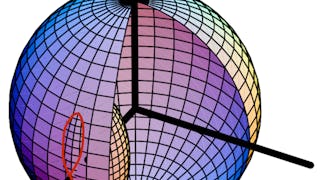
The goal of this capstone spacecraft dynamics project is to employ the skills developed in the rigid body Kinematics, Kinetics and Control courses. An exciting two-spacecraft mission to Mars is considered where a primary mother craft is in communication with a daughter vehicle in another orbit. The challenges include determining the kinematics of the orbit frame and several desired reference frames, numerically simulating the attitude dynamics of the spacecraft in orbit, and implementing a feedback control that then drives different spacecraft body frames to a range of mission modes including sun pointing for power generation, nadir pointing for science gathering, mother spacecraft pointing for communication and data transfer. Finally, an integrated mission simulation is developed that implements these attitude modes and explores the resulting autonomous closed-loop performance. Tasks 1 and 2 use three-dimensional kinematics to create the mission related orbit simulation and the associated orbit frames. The introductory step ensures the satellite is undergoing the correct motion, and that the orbit frame orientation relative to the planet is being properly evaluated. Tasks 3 through 5 create the required attitude reference frame for the three attitude pointing modes called sun-pointing, nadir-pointing and GMO-pointing. The reference attitude frame is a critical component to ensure the feedback control drives the satellite to the desired orientation. The control employed remains the same for all three pointing modes, but the performance is different because different attitude reference frames are employed. Tasks 6 through 7 create simulation routines to first evaluate the attitude tracking error between a body-fixed frame and a particular reference frame of the current attitude mode. Next the inertial attitude dynamics is evaluated through a numerical simulation to be able to numerically analyze the control performance. Tasks 8-11 simulate the closed-loop attitude performance for the three attitude modes. Tasks 8 through 10 first simulate a single attitude at a time, while tasks 11 develops a comprehensive attitude mission simulation which considers the attitude modes switching autonomously as a function of the spacecraft location relative to the planet. The material covered is taking from the book "Analytical Mechanics of Space Systems" available at https://arc.aiaa.org/doi/book/10.2514/4.105210.
AA
Great application of the knowledge obtained through the course
DM
Excellent, comprehensive review of the course - kinetics, kinematics, and control but I removed a star due to the tight tolerances in the answers. I was off by exactly 0.001 and it was marked wrong.
显示:18/18
I love how this was laid out, when I got to the final full mission simulation all of the pieces just fell into place. The checks along the way give you the confidence that all of the pieces are working correctly, so the classic issue of trying to put all of your functions together and having something unknown not work is almost eliminated. This means no spending hours trying to find that stray sign that is causing the whole simulation to collapse!
Only improvement would be to increase feedback on the programming assignments and fix the few typos on the tolerance of your answer. Specifically Task 4 Part 2, I found my answer to 4 decimals was not accepted, but to 7 decimals it was.
Otherwise, great course! I learned a lot and hope it will help me move into the space industry soon!
I exceeded 30 courses in Coursera, and this is the only course that I could not pass. Please put tests or evaluated assignments from colleagues like the rest of the courses. Whenever I send a programming assignment he tells me not sent, please amend these errors.
This course is fantastic. One thing to be aware of - there is very little moderation of the discussion boards, so us students are kind of on our own if we get stuck - however, I found that the discussion boards were active enough to get by.
The good: - Amazing content. Great presentation. I think Professor Schaub is a good lecturer and presents the information well. The bad: There is no faculty (professor or TA) support. There are some discussions in the forums, but not a whole lot of direction. Also, with the course setup this way, peer review becomes very difficult, because there is no guarantee that there are enough peers to review (and be reviewed). There are also many typos in the quizzes so it's difficult to know if an answer is truly wrong. Finally, the simulation questions can be infuriating because the same codebase can work for one but not the other, and with no support, it's difficult to determine the issue. Still, the content is great and you learn a lot.
Extremely interesting course, it is very encouraging to get every step of the project right. A small critic is the lack of guidance in some of the tasks to develop. There is virtually no support from the course developers or moderators. I would not blame this on Prof. Schaub, who is an amazing teacher, and his lessons were extremely valuable. But I think the purpose of the other 25 moderators of the course is to give a minimum support for the questions people post in the forum, which I didn't see whatsoever in any of the month-old posts.
This course was really great! I could complete the previous three courses in 6 weeks, but this course took from me 3 weeks. I have faced some issues, however, I could overcome and succeed at the end and this is the most important part. I am really grateful for Coursera and professor Hanspeter Schaub for this opportunity. This great professor will be absolutely missed!.
Great capstone that covers almost all of the desired knowledge one would need from the first to last chapter! Definitely enjoyed this project. The project is also well guided, although one may need to look at the forums now and then for hints and tips on nitty gritties like numerical precision issues etc. Thank you Professor HP Schaub and team.
Great tool for making sure I am on the right track each step of the project. It's nice to be able to submit a project with no uncertainty regarding the accuracy of my results. The 5 submissions per 8 hours feels a bit pointless though. They are all numerical submissions, so you can't power through by guessing and checking like the homeworks.
A strong and well-stated validation that we've learned the material from the previous 3 courses! It's a CAPSTONE! Thanks so much for the clear guidelines. Thanks for making us confident in the area of spacecraft control!
Very interesting Capstone project for the whole program. There were some missing instructions or information, but the Forum point me to the right direction.
Very practical and fun! Useful for those who wants to pursue a career in AOCS/GNC engineer or just a brush-up.
Great application of the knowledge obtained through the course
This capstone project was a lot of fun.
Fantastic project!!!!
Excellent, comprehensive review of the course - kinetics, kinematics, and control but I removed a star due to the tight tolerances in the answers. I was off by exactly 0.001 and it was marked wrong.
The structure is well paced, but some of the instructions weren't clear enough to overcome many common problems that people have in the discussion forums.
Just use octave, if you use python you're going to wind up pulling your hair out. The teeny tiny numerical differences between python and octave will get your solution marked wrong even though your code is 100% correct.