A child born in 2020 is projected into an interconnected, interdependent world, in which local events can have global resonances and in which international phenomena impact the daily lives of many individuals. In order to prepare for this, not only the school, but also all the actors who make up the world of education must grasp new challenges characterized by an unprecedented internationalization.

Internationalization of Education: Global Issues & Trends
通过 Coursera Plus 提高技能,仅需 239 美元/年(原价 399 美元)。立即节省

Internationalization of Education: Global Issues & Trends


位教师:Myriam Radhouane
授课教师
授课教师评分
我们要求所有学生根据授课教师的教学风格和质量提供对授课教师的反馈。
4.8 (7个评价)
2,704 人已注册
包含在 中
您将学到什么
To identify the local resonances of global transformations in education.
To define and understand key terms and new fields arising from the internationalization of education.
To put into perspective what different actors in the educational sector have to say about internationalization.
要了解的详细信息

可分享的证书
添加到您的领英档案
作业
28 项作业
授课语言:英语(English)
了解顶级公司的员工如何掌握热门技能

该课程共有6个模块
This first module is designed to introduce you to the overall theme of the course: internationalization of education. By defining educational policies and globalization, you will see the links between them and their effects on education systems. You will also see how various international organizations are key players in these internationalization processes. The aim of the course is to help you understand how events on a global scale can impact local or national education systems. This first module is therefore a springboard for placing education at the heart of an interdependent, globalized and increasingly complex world.
涵盖的内容
11个视频3篇阅读材料4个作业1个讨论话题
11个视频• 总计69分钟
- MOOC trailer• 2分钟
- Welcome to this MOOC• 3分钟
- Module introduction: From education policies to their internationalization• 2分钟
- Educational policies: definition and aims• 4分钟
- What is globalization ?• 10分钟
- Consequences of globalization in education• 9分钟
- Concrete examples of school transformations• 8分钟
- Main organisations' perspectives on education• 5分钟
- Concepts as tools to shape educational reforms• 12分钟
- International organizations: a North-South perspective• 11分钟
- Module conclusion - From national educational policies to their internationalization• 2分钟
3篇阅读材料• 总计50分钟
- 📢 Important preliminary information: Evaluations and subtitles• 5分钟
- Course glossary: educational policies • 15分钟
- Course glossary: globalization• 30分钟
4个作业• 总计43分钟
- Final Assignment: From national educational policies to their internationalization• 20分钟
- Globalization and education• 8分钟
- Organizations and their perspective on education• 5分钟
- International organizations and education• 10分钟
1个讨论话题• 总计15分钟
- Your experience of the evolution of educational policies• 15分钟
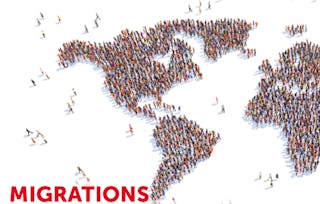
Global migrations are a path to internationalization, as well as one of the effects of globalization. Populations migrate, flee, and are always in search of something better or of survival. In this respect, migration has implied many changes, both in terms of educational policies and in the very conception of educational models. In systems where schools have traditionally been seen as a means of consolidating a Nation-State, migration has led to a rethinking of the place of identities, borders and the cultural dimension of education. In some cases, it is the forced nature of migration that will call for new educational policies, sometimes conceived as a matter of urgency, with the aim of responding rapidly to the needs of the most vulnerable pupils: refugee children. In this module, we explore this panorama of international migration and its effects on education. Through this theme, we will see how international events have repercussions on local actions.
涵盖的内容
8个视频7篇阅读材料6个作业1个插件
8个视频• 总计44分钟
- Module introduction: Global migrations as the main dimension of internationalization• 1分钟
- Global migrations and education• 5分钟
- Key concepts for considering migration in education• 7分钟
- Consequences of increasing cultural diversity on education• 6分钟
- Consideration of cultural diversity by international organizations• 6分钟
- Discovering and defining Education in Emergencies (EIE)• 5分钟
- The INEE Minimum Standards : presentation by Dr. Ariel Solari (INEE)• 12分钟
- Global migrations and education• 3分钟
7篇阅读材料• 总计105分钟
- World Migration Report• 15分钟
- Course glossary: culture, integration and assimilation, internally displaced people/refugee• 15分钟
- The advent of intercultural approaches in education• 15分钟
- The effects of international migration on national educational systems - Interview with Claire de Goumoëns• 10分钟
- (suggestion) Pedagogical challenges in integrating refugee students in resettlement countries• 10分钟
- Education in Emergencies: from the field - Interview with Ibrahim Khatip and Davis Wamonhi• 10分钟
- Educating in emergency contexts: schooling, curriculum and innovation (Editorial)• 30分钟
6个作业• 总计45分钟
- Final Assignment: Global migrations and education• 20分钟
- Migration around the world• 3分钟
- Key concepts in use• 5分钟
- Addressing cultural diversity in education• 10分钟
- Defining EIE• 5分钟
- INEE Minimum standards• 2分钟
1个插件• 总计15分钟
- UNHCR's Global Trends Report: 100 Million Displaced• 15分钟
It is common today to receive calls for funds for international cooperation projects in education: these projects are numerous, often aiming at noble objectives such as the development of educational structures, or teacher education, all with the aim of allowing the greatest number of children to have access to quality education, all over the world. However, these projects, their conception and their implementation can be questioned: when did this type of initiative emerge; what is the vision of the world and more particularly of North-South relations? How are they implemented and with what collaboration with local communities? These are the questions that inspired this module. This is why we will explore together the origins, but also the current challenges of international cooperation in education: to understand its potential, while keeping in mind its limitations.
涵盖的内容
9个视频3篇阅读材料4个作业1个应用程序项目
9个视频• 总计93分钟
- Module introduction: international cooperation in education, roles and issues• 2分钟
- Defining international cooperation in education and its historical roots• 12分钟
- International cooperation main institutions• 11分钟
- Interview of Sobhi Tawil: UNESCO and international cooperation• 16分钟
- Interview of Juan Carlos Moreno: World Bank and international cooperation• 16分钟
- Examples of international initatives for education• 6分钟
- Interview of Myriam Gallio: The example of Enfants du Monde, an NGO active in international cooperation• 16分钟
- Is international cooperation in education effective ?• 10分钟
- Module conclusion: international cooperation in education: roles and issues• 4分钟
3篇阅读材料• 总计28分钟
- Website : Globalpartnership for education• 10分钟
- Course glossary: Relevance and quality • 8分钟
- Making education in Africa fit for the 21st century • 10分钟
4个作业• 总计30分钟
- Final Assignment: International cooperation in education• 20分钟
- International cooperation main institutions• 3分钟
- International cooperation in practice• 5分钟
- Relevance and quality within international cooperation in education• 2分钟
1个应用程序项目• 总计60分钟
- International cooperation in education and its historical roots• 60分钟
These days, if you are looking for an article on an educational topic, chances are you will come across one in English or French. Indeed, most of the theoretical frameworks and authors referenced will come from European or North American academic circles. And yet, the voices of the South are neither silent nor non-existent. They participate in the internationalization of education, insofar as North-South relations are an important part of the action of international organizations active in education, and the South is the subject of numerous educational reforms guided by the process of internationalization. In this module, we propose to understand what the Global South is, its place in international educational relations, and the issues underlying the way in which the South is viewed. Finally, the last lesson aims to open up your educational perspectives by introducing you to pedagogies and pedagogues from the South.
涵盖的内容
9个视频5篇阅读材料4个作业
9个视频• 总计54分钟
- Module introduction: Global south's perspective on education• 2分钟
- Defining the Global South• 4分钟
- History and current situation of North-South relations in education• 6分钟
- A tool for a fair understanding of otherness: the concept of essentialism• 3分钟
- Social justice and epistemic justice: pathways to more egalitarian relations between North and South• 7分钟
- Interview with Abdel Raman Baba Moussa: Indigenization of educational systems: why and how ? • 14分钟
- Alternative pedagogies from the South• 8分钟
- Educational thinkers from the South• 7分钟
- Module conclusion: Global South's perspectives on alternative education• 2分钟
5篇阅读材料• 总计113分钟
- Global South : What does it mean and why use the term ?• 15分钟
- Course glossary: essentialism• 8分钟
- Course glossary: social justice and epistemic justice• 30分钟
- Course glossary: indigenization• 30分钟
- Literacy for self-reliance: A critical exploration of Nyerere’s legacy in Tanzanian education policies• 30分钟
4个作业• 总计39分钟
- Final Assignment: Global South's perspectives • 20分钟
- North-South relations in education• 3分钟
- Education through a Global South perspective: concepts• 6分钟
- Knowledge from the South • 10分钟
A prominent example of how education is becoming more international is the development of the concept of Global Citizenship Education. Since it was used by Ban Ki-Moon in 2012, it has become a leading theme in the educational world. International organizations and universities alike have taken it up. This concept crosses the issues of citizenship and sustainable development, which is why these two dimensions will be addressed in the module. As they represent major trends in education today, the module's primary objective is to give you access to the meaning of these concepts, but also to the tensions that characterize them.
涵盖的内容
9个视频2篇阅读材料5个作业1个讨论话题
9个视频• 总计46分钟
- Module introduction: Global citizenship education and sustainability in education• 2分钟
- Citizenship: local, national and global level ?• 3分钟
- Interview with Sobhi Tawil (UNESCO): Emergence and definition of global citizenship education• 8分钟
- Global citizenship education: between unclear definitions and various approaches• 4分钟
- Different understandings of Global citizenship education: comparison between Swiss and Kazakhstan• 5分钟
- What is sustainability, and what is education for sustainable development ?• 8分钟
- SDGs and education: objectives, impacts and issues• 4分钟
- Interview with Kristine Balslev (University of Geneva): implementing education for sustainable development in schools• 10分钟
- Module conclusion: global citizenship and sustainability in education• 3分钟
2篇阅读材料• 总计45分钟
- Global concept and local understandings: Global citizenship education around the world• 15分钟
- Sustainable development goals• 30分钟
5个作业• 总计47分钟
- Final Assignment : Global citizenship and sustainability• 20分钟
- History and definition of global citizenship education• 5分钟
- Global concept and local understandings• 2分钟
- Global citizenship education, world perspectives• 10分钟
- Developing education for sustainable development• 10分钟
1个讨论话题• 总计10分钟
- Being a global citizen in my country/region• 10分钟
In this module, we will try to understand how the governance of education is becoming increasingly international. Guided by international agendas, objectives are being harmonized between states. Monitoring processes are also becoming more international and concepts such as efficiency, quality, privatization... are found in many contexts in the North as well as the South. Through this module, we will try to identify the elements of this global governance, but also the underlying issues.
涵盖的内容
12个视频3篇阅读材料5个作业
12个视频• 总计94分钟
- Towards global and local governance of education• 3分钟
- From Jomtien to Incheon: presentation of international agendas• 7分钟
- Critical perspective on international agendas• 6分钟
- Internationalization and monitoring • 6分钟
- Monitoring through a World Bank perspective• 10分钟
- Standardised tests: a powerful tool to monitor education systems• 5分钟
- Effect 1 of internationalization: privatization• 10分钟
- Effect 2 of internationalization: accountability• 11分钟
- Module conclusion: international education, towards a global governance• 3分钟
- Internationalization of education: global issues and trends• 8分钟
- Monitoring - Interview with Manos Antoninis• 12分钟
- Private tutoring - Interview with Marc Bray• 12分钟
3篇阅读材料• 总计68分钟
- Zoom on: "Education 2030"• 30分钟
- Course glossary: efficiency• 30分钟
- Course glossary: privatization and accountability• 8分钟
5个作业• 总计60分钟
- Final quiz: global and local governance• 20分钟
- International agendas in education• 10分钟
- Monitoring • 10分钟
- Monitoring of education systems • 5分钟
- Defining and mobilizing concepts • 15分钟
位教师
授课教师评分
4.8 (7个评价)授课教师评分
我们要求所有学生根据授课教师的教学风格和质量提供对授课教师的反馈。
提供方

提供方

University of Geneva
Founded in 1559, the University of Geneva (UNIGE) is one of Europe's leading universities. Devoted to research, education and dialogue, the UNIGE shares the international calling of its host city, Geneva, a centre of international and multicultural activities with a venerable cosmopolitan tradition.
从 Education 浏览更多内容
 U
UUniversity of Michigan
专项课程
 S
SSciences Po
课程
 N
NNational Taiwan University
课程
 E
EESSEC Business School
课程
人们为什么选择 Coursera 来帮助自己实现职业发展

Felipe M.
自 2018开始学习的学生
''能够按照自己的速度和节奏学习课程是一次很棒的经历。只要符合自己的时间表和心情,我就可以学习。'

Jennifer J.
自 2020开始学习的学生
''我直接将从课程中学到的概念和技能应用到一个令人兴奋的新工作项目中。'

Larry W.
自 2021开始学习的学生
''如果我的大学不提供我需要的主题课程,Coursera 便是最好的去处之一。'

Chaitanya A.
''学习不仅仅是在工作中做的更好:它远不止于此。Coursera 让我无限制地学习。'
学生评论
4.6
18 条评论
- 5 stars
77.77%
- 4 stars
16.66%
- 3 stars
0%
- 2 stars
0%
- 1 star
5.55%
显示 3/18 个
E
EE
4·
已于 May 6, 2025审阅
Few interviews were not in English and didn't even have English subtitle. Other than that, I really enjoyed the course. :)

常见问题
To access the course materials, assignments and to earn a Certificate, you will need to purchase the Certificate experience when you enroll in a course. You can try a Free Trial instead, or apply for Financial Aid. The course may offer 'Full Course, No Certificate' instead. This option lets you see all course materials, submit required assessments, and get a final grade. This also means that you will not be able to purchase a Certificate experience.
When you purchase a Certificate you get access to all course materials, including graded assignments. Upon completing the course, your electronic Certificate will be added to your Accomplishments page - from there, you can print your Certificate or add it to your LinkedIn profile.
Yes. In select learning programs, you can apply for financial aid or a scholarship if you can’t afford the enrollment fee. If fin aid or scholarship is available for your learning program selection, you’ll find a link to apply on the description page.
更多问题
提供助学金,