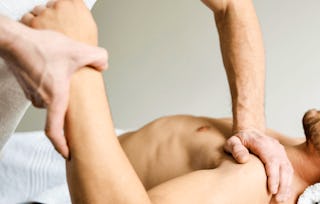
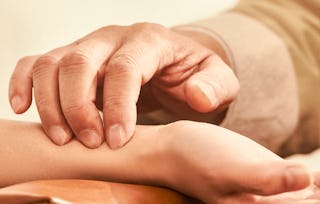
By the end of this course, you will (1) apply acupuncture techniques to treat common musculoskeletal conditions and (2) refine diagnostic reasoning using traditional and modern frameworks. Building on Level 1, Dr. Constance Bradley presents condition-specific protocols for nine key cases including frozen shoulder, low back pain, carpal tunnel, TMJ, and plantar fasciitis.
以 199 美元(原价 399 美元)购买一年 Coursera Plus,享受无限增长。立即节省

Applied Acupuncture Techniques for Common Conditions
包含在 中
您将学到什么
How to select and needle points for nine common pain conditions
How to integrate acupuncture safely into modern rehabilitation care
要了解的详细信息

添加到您的领英档案
December 2025
4 项作业
了解顶级公司的员工如何掌握热门技能

积累特定领域的专业知识
- 向行业专家学习新概念
- 获得对主题或工具的基础理解
- 通过实践项目培养工作相关技能
- 获得可共享的职业证书

该课程共有4个模块
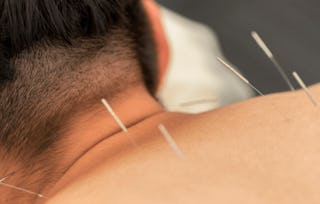
In this module, learners explore three of the most common pain presentations treated with acupuncture: temporomandibular disorder (TMD), axial neck pain, and frozen shoulder. The instructor begins with TMD, explaining how pain can originate from the temporomandibular joint and surrounding structures, often caused by clenching, bruxism, stress, or degeneration. The module demonstrates local needling techniques such as working into the joint space, the masseter, and supporting facial muscles to reduce inflammation and restore jaw movement. The course then transitions to axial neck pain, where learners observe how acupuncture is applied along the cervical musculature to decrease tension and improve mobility. Finally, frozen shoulder is presented as another high-frequency case, with needling strategies designed to reduce capsular tightness and restore range of motion. Throughout the module, the instructor reinforces clinical reasoning, palpation accuracy, and safe needle placement to improve outcomes and client comfort.
涵盖的内容
7个视频3篇阅读材料1个作业1个讨论话题
Module 2 continues with three clinically common pain conditions affecting the upper and lower extremities: carpal tunnel syndrome, tennis elbow, and anterior knee pain. Learners are guided through hallmark symptoms, red flags, and differential considerations. For carpal tunnel syndrome, the instructor explains how median nerve entrapment causes numbness and tingling into the thumb and central fingers, and demonstrates a careful needling approach at the wrist and hand while avoiding vascular and nerve structures. Tennis elbow is introduced as a localized lateral elbow pain related to extensor tendon overload. The instructor shows how to palpate and needle the common extensor tendon and supportive forearm structures. The module then addresses anterior knee pain, demonstrating safe needling around the patellofemoral region to reduce inflammation and restore function. Each demonstration emphasizes positioning, depth control, and intentional needle selection rather than memorizing point formulas.
涵盖的内容
3个视频1个作业
Module 3 applies acupuncture techniques across three contrasting regions of the body: lumbar spine, foot, and abdomen. Lower back pain is presented as one of the most frequent reasons people seek acupuncture. The instructor explains assessment, palpation of paraspinals, and needling to influence deep lumbar tissue tension and improve movement. The focus then moves to plantar fasciitis, where learners see how local and distal point selection affects fascial tension and improves weight-bearing tolerance. The module concludes with constipation, demonstrating abdominal point selection and explaining how acupuncture influences autonomic regulation and digestive motility. Although these conditions differ anatomically, the clinician reinforces a consistent reasoning process: identify what tissue or structure is driving the symptom, select local and distal points strategically, and reassess after needling. The learner finishes the module with confidence applying acupuncture concepts to diverse presentations.
涵盖的内容
3个视频1个作业
This final exam is designed to assess your understanding of the key concepts presented throughout the course. Please review all video lessons and written materials before beginning. A passing score of 70% or higher is required to successfully complete the course and earn your CE certificate. You may reference your notes during the exam. Once you pass, your certificate will be available for immediate download.
涵盖的内容
1个视频1个作业1个讨论话题
获得职业证书
将此证书添加到您的 LinkedIn 个人资料、简历或履历中。在社交媒体和绩效考核中分享。
位教师

从 Patient Care 浏览更多内容
状态:免费试用University of Minnesota
状态:预览The Chinese University of Hong Kong
状态:预览Michigan State University
状态:免费试用University of Minnesota
人们为什么选择 Coursera 来帮助自己实现职业发展


常见问题
To access the course materials, assignments and to earn a Certificate, you will need to purchase the Certificate experience when you enroll in a course. You can try a Free Trial instead, or apply for Financial Aid. The course may offer 'Full Course, No Certificate' instead. This option lets you see all course materials, submit required assessments, and get a final grade. This also means that you will not be able to purchase a Certificate experience.
When you enroll in the course, you get access to all of the courses in the Specialization, and you earn a certificate when you complete the work. Your electronic Certificate will be added to your Accomplishments page - from there, you can print your Certificate or add it to your LinkedIn profile.
Yes. In select learning programs, you can apply for financial aid or a scholarship if you can’t afford the enrollment fee. If fin aid or scholarship is available for your learning program selection, you’ll find a link to apply on the description page.
更多问题
提供助学金,