Sungkyunkwan University

Zhu Xi and Jeong Yak-yong in Comparative Perspective

Ce cours n'est pas disponible en Français (France)

Nous sommes actuellement en train de le traduire dans plus de langues.
Sungkyunkwan University

Zhu Xi and Jeong Yak-yong in Comparative Perspective

Youngsun Back
Soyoung You
dobin choi

Instructeurs : Youngsun Back

Inclus avec Coursera Plus

Obtenez un aperçu d'un sujet et apprenez les principes fondamentaux.
niveau Intermédiaire
Certaines connaissances prérequises
2 semaines à compléter
à 10 heures par semaine
Planning flexible
Apprenez à votre propre rythme
Obtenez un aperçu d'un sujet et apprenez les principes fondamentaux.
niveau Intermédiaire
Certaines connaissances prérequises
2 semaines à compléter
à 10 heures par semaine
Planning flexible
Apprenez à votre propre rythme

Ce que vous apprendrez

  • Understand the diversity of the Confucian tradition.

  • Analyze each thinker's models of moral cultivation.

  • Critically evaluate key philosophical issues.

Compétences que vous acquerrez

  • Catégorie : Cultural Diversity
  • Catégorie : Intercultural Competence
  • Catégorie : Human Development
  • Catégorie : Human Learning
  • Catégorie : Music
  • Catégorie : Culture
  • Catégorie : Habit Formation
  • Catégorie : Music Theory
  • Catégorie : Liberal Arts
  • Catégorie : Aesthetics
  • Catégorie : Ancient History
  • Catégorie : Ethical Standards And Conduct

Détails à connaître

Certificat partageable

Ajouter à votre profil LinkedIn

Récemment mis à jour !

mars 2026

Évaluations

9 devoirs

Enseigné en Anglais

Découvrez comment les employés des entreprises prestigieuses maîtrisent des compétences recherchées

 logos de Petrobras, TATA, Danone, Capgemini, P&G et L'Oreal

Élaborez votre expertise du sujet

Ce cours fait partie de la Spécialisation " Korean Philosophy Electives"
Lorsque vous vous inscrivez à ce cours, vous êtes également inscrit(e) à cette Spécialisation.
  • Apprenez de nouveaux concepts auprès d'experts du secteur
  • Acquérez une compréhension de base d'un sujet ou d'un outil
  • Développez des compétences professionnelles avec des projets pratiques
  • Obtenez un certificat professionnel partageable

Il y a 8 modules dans ce cours

Welcome to the opening of our journey into East Asian philosophy. This module introduces the two towering figures who defined the intellectual landscape of their respective eras: Zhu Xi, the great synthesizer of Neo-Confucianism in 12th-century China, and Jeong Yak-yong (Dasan), the representative realist scholar of 18th-century Korea. We delve into the core philosophical debate that shaped East Asian thought for centuries. We begin by exploring Zhu Xi’s Li-Qi Theory, a grand metaphysical framework that views human nature as an extension of cosmic principles. You will learn how Zhu Xi established a rigorous system where moral cultivation starts with understanding the Principle (Li) inherent in all things. Then, we transition to Jeong Yak-yong’s critical response. Breaking away from abstract metaphysics, Jeong Yak-yong shifted the focus from "What we are" to "What we do." We will examine his "Theory of Inclination" and his insistence that virtue is not a pre-installed essence but a result of active, concrete practice.

Inclus

5 vidéos2 lectures1 devoir1 sujet de discussion

In this lecture, Prof. Soyoung You will help you understand Dasan’s redefinition of Confucian learning. Situating Dasan within the dynamic intellectual environment shaped by Evidential Learning and Western Learning, she explains how Dasan challenged Zhu Xi’s interpretation of The Great Learning and instead positioned The Doctrine of the Mean as the foundation of Confucian learning. Centering on sincerity (seong), self-examination (sindok), and reverent moral vigilance (gyesin gonggu) under Sangje, Dasan redefined learning as the cultivation of the sindok gunja, emphasizing continuous moral vigilance.

Inclus

7 vidéos1 lecture1 devoir

In this week, Prof. Dobin Choi explains the theme of “human nature” in later Confucianism through a comparative study of Zhu Xi and Dasan Jeong Yak-yong. Revisiting the long-standing Confucian concern with human nature (xing, 性), he contrasts Zhu Xi’s metaphysical account grounded in Principle (Li, 理) with Dasan’s more empirical interpretation centered on taste (Giho, 嗜好). Engaging especially with Mengzi’s claim that human nature is inherently good, the lecture highlights how each thinker reinterprets the classical tradition in a distinctive way. Their contrasting views of human nature ultimately lead to different visions of moral cultivation and the path toward ethical self-formation.

Inclus

8 vidéos1 lecture1 devoir

In this lecture, Prof. Dobin Choi compares Zhu Xi and Dasan Jeong Yak-yong on the Confucian ideal of moral self-cultivation through the concept of Shu (sympathetic concern). Drawing on passages from the Analects and Mengzi, he explains how Zhu Xi interprets “all things are within me” through the metaphysical theory of Li Principle, emphasizing inward reflection and sincerity (cheng). By contrast, Dasan grounds sympathetic concern in shared human taste (giho) and everyday sentiments, highlighting interpersonal understanding and outward moral practice.

Inclus

7 vidéos1 lecture1 devoir

In this lecture, we explores the contrasting visions of the "good life" held by the Chinese philosopher Zhu Xi and the Korean scholar Jeong Yak-yong (Dasan). Both thinkers agree that a good life is rooted in virtue, yet they diverge significantly on the role of external circumstances and non-moral goods. In Zhu Xi's view, the tragic, short life of the virtuous Yan Yuan is as "good" as the prosperous life of Sage King Shun. In contrast, Dasan rejects this asceticism, arguing that virtues are not innate but acquired through concrete practice. Consequently, he views Shun’s flourishing life as preferable to Yan Yuan’s.

Inclus

6 vidéos1 lecture1 devoir

In this lecture, Prof. Youngsun Back compares Zhu Xi and Dasan Jeong Yak-yong on the question of sagehood in Confucianism. While both agree that sages and ordinary people share the same human nature, Zhu Xi explains the emergence of sages through differences in psychophysical endowments and the idea of “natural sages.” Dasan, by contrast, emphasizes human effort, arguing that all people begin with the same moral capacity and can become sages through continuous learning and self-cultivation.

Inclus

6 vidéos1 lecture1 devoir

After exploring the metaphysical and practical dimensions of human cultivation, we now turn our gaze toward a fascinating and often surprising topic: the moral status of non-human animals. In this session, Prof. Youngsun Back uses the animal kingdom as a mirror to reflect the core of Confucian ethics. By asking whether a tiger can be "filial" or a bee "loyal," we uncover a fundamental disagreement between our two thinkers, Zhu Xi and Jeong Yak-yong (Dasan). Through modern philosophical lenses (like Mark Rowlands’ distinction between moral subjects and moral agents) and real-life hero stories, this lecture challenges us to define what truly makes an act "moral."

Inclus

5 vidéos1 lecture1 devoir

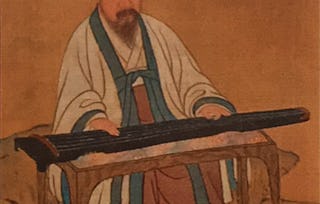
This lecture by Prof. Jo Jungeun examines the music theories of Zhu Xi and Jeong Yak-yong through the Sambun sonik (三分損益) method and the formation of the twelve pitch-standards. We begin by exploring the Sambun sonik method as presented in Ancient Chinese text, the Huainanzi and the Hanshu, focusing on how the twelve pitch-standards are generated through numerical calculation. We then turn to Zhu Xi’s acceptance of this traditional framework, followed by Jeong Yak-yong’s critical response and his proposal of a new system grounded in yin–yang principles. The lecture offers a clear comparative overview of their different approaches to pitch theory.

Inclus

6 vidéos1 lecture2 devoirs

Obtenez un certificat professionnel

Ajoutez ce titre à votre profil LinkedIn, à votre curriculum vitae ou à votre CV. Partagez-le sur les médias sociaux et dans votre évaluation des performances.

Instructeurs

Youngsun Back
Sungkyunkwan University
4 Cours890 apprenants
Soyoung You
Sungkyunkwan University
1 Cours19 apprenants
dobin choi
Sungkyunkwan University
1 Cours19 apprenants

Offert par

En savoir plus sur Philosophy
Pour quelles raisons les étudiants sur Coursera nous choisissent-ils pour leur carrière ?

Felipe M.

Étudiant(e) depuis 2018
’Pouvoir suivre des cours à mon rythme à été une expérience extraordinaire. Je peux apprendre chaque fois que mon emploi du temps me le permet et en fonction de mon humeur.’

Jennifer J.

Étudiant(e) depuis 2020
’J'ai directement appliqué les concepts et les compétences que j'ai appris de mes cours à un nouveau projet passionnant au travail.’

Larry W.

Étudiant(e) depuis 2021
’Lorsque j'ai besoin de cours sur des sujets que mon université ne propose pas, Coursera est l'un des meilleurs endroits où se rendre.’

Chaitanya A.

’Apprendre, ce n'est pas seulement s'améliorer dans son travail : c'est bien plus que cela. Coursera me permet d'apprendre sans limites.’
Coursera Plus

Ouvrez de nouvelles portes avec Coursera Plus

Accès illimité à 10,000+ cours de niveau international, projets pratiques et programmes de certification prêts à l'emploi - tous inclus dans votre abonnement.

Faites progresser votre carrière avec un diplôme en ligne

Obtenez un diplôme auprès d’universités de renommée mondiale - 100 % en ligne

Rejoignez plus de 3 400 entreprises mondiales qui ont choisi Coursera pour les affaires

Améliorez les compétences de vos employés pour exceller dans l’économie numérique

Foire Aux Questions