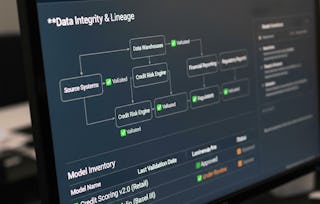
By the end of this course, learners will be able to analyze historic and modern financial crises, evaluate liquidity risks, apply regulatory ratios, and design effective liquidity management strategies. Through case studies of the Great Depression and the 2008 financial crisis, participants will gain a comprehensive understanding of how crises unfold and impact global economies.

Manage Global Economic Crises with Liquidity Tools

您将学到什么
Analyze historic and modern financial crises and their impacts.
Apply LCR, NSFR, and stress testing to manage liquidity risks.
Design strategies that strengthen financial resilience in markets.
您将获得的技能
要了解的详细信息

可分享的证书
添加到您的领英档案
作业
12 项作业
授课语言:英语(English)
最近已更新!
September 2025
了解顶级公司的员工如何掌握热门技能

该课程共有3个模块
This module explores the historical roots of economic crises, starting from the Great Depression of 1929 to the global financial crisis of 2008. Learners will analyze causes, effects, and lessons drawn from these downturns, while building a strong foundation in understanding how crises reshape economies and liquidity conditions in the US and UK.
涵盖的内容
8个视频4个作业
This module investigates the unfolding of the credit crunch, liquidity challenges in banking, and the frameworks established to manage stress. Learners will assess institutional failures, government rescue measures, and the principles guiding liquidity management and financial stability.
涵盖的内容
9个视频4个作业
This module focuses on modern regulatory approaches, including the Liquidity Coverage Ratio (LCR) and Net Stable Funding Ratio (NSFR). Learners will explore balance sheet governance, regulatory compliance, and the importance of liquidity management as a safeguard against financial crises.
涵盖的内容
7个视频4个作业


人们为什么选择 Coursera 来帮助自己实现职业发展

Felipe M.
自 2018开始学习的学生
''能够按照自己的速度和节奏学习课程是一次很棒的经历。只要符合自己的时间表和心情,我就可以学习。'

Jennifer J.
自 2020开始学习的学生
''我直接将从课程中学到的概念和技能应用到一个令人兴奋的新工作项目中。'

Larry W.
自 2021开始学习的学生
''如果我的大学不提供我需要的主题课程,Coursera 便是最好的去处之一。'

Chaitanya A.
''学习不仅仅是在工作中做的更好:它远不止于此。Coursera 让我无限制地学习。'