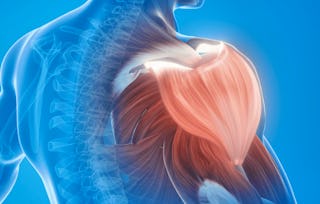
By the end of this course, you will (1) identify and address rotator cuff dysfunction through targeted assessment and (2) apply manual and exercise therapies for full functional recovery. Presented by Dr. Jonathan Kuttner, this course explores the four rotator cuff muscles in depth, explaining trigger point formation, muscle imbalances, and compensatory patterns.

Rotator Cuff Assessment and Treatment Techniques

Rotator Cuff Assessment and Treatment Techniques
访问权限由 New York State Department of Labor 提供
您将学到什么
How to locate and treat trigger points and dysfunctions in the rotator cuff
How to integrate manual therapy, stretching, and exercise for lasting results
您将获得的技能
要了解的详细信息

可分享的证书
添加到您的领英档案
作业
4 项作业
授课语言:英语(English)
最近已更新!
December 2025
了解顶级公司的员工如何掌握热门技能

积累特定领域的专业知识
本课程是 Comprehensive Shoulder Rehabilitation 专项课程 专项课程的一部分
在注册此课程时,您还会同时注册此专项课程。
- 向行业专家学习新概念
- 获得对主题或工具的基础理解
- 通过实践项目培养工作相关技能
- 获得可共享的职业证书

该课程共有4个模块
In the first module, Dr. Kuttner presents a clear, practical breakdown of the rotator cuff and its unique role in shoulder function. The rotator cuff is introduced not as four isolated muscles but as a synergistic system responsible for stabilising the humeral head and guiding precise shoulder movement. The module explains how the rotator cuff interacts with the larger shoulder muscles, how the scapula forms the functional base for movement, and why shoulder pain often develops from imbalance, posture, or overload.
涵盖的内容
2个视频3篇阅读材料1个作业1个讨论话题
In this Module you will learn the key actions of each muscle (supraspinatus, infraspinatus, teres minor, and subscapularis), how to recognise common mechanical faults, and how these contribute to impingement, painful arcs of movement, or loss of range.
涵盖的内容
4个视频1篇阅读材料1个作业
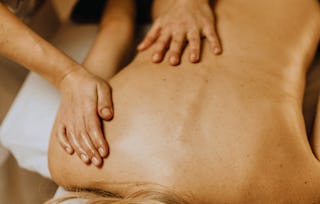
Module 3 translates anatomical knowledge into hands-on application. Dr. Kuttner demonstrates step-by-step trigger point treatment for all four main muscles of the rotator cuff. You will learn how to accurately locate each muscle using surface anatomy landmarks, how to palpate to identify taut bands and trigger points, and how to apply trigger point pressure safely and effectively.Detailed demonstrations show therapist hand positioning, body mechanics, pressure direction, and how to monitor client feedback. You will also see how to integrate stretching or movement after release to restore resting length and function. The module emphasises precision rather than force — working with tissue responsiveness, not against it.By the end of Module 2, therapists will be able to confidently identify, treat, and reduce trigger point activity in the rotator cuff, improving range of motion, decreasing pain, and supporting long-term recovery.
涵盖的内容
4个视频1篇阅读材料1个作业1个讨论话题
This final exam is designed to assess your understanding of the key concepts presented throughout the course. Please review all video lessons and written materials before beginning. A passing score of 70% or higher is required to successfully complete the course and earn your CE certificate. You may reference your notes during the exam. Once you pass, your certificate will be available for immediate download.
涵盖的内容
1个作业
获得职业证书
将此证书添加到您的 LinkedIn 个人资料、简历或履历中。在社交媒体和绩效考核中分享。
位教师


人们为什么选择 Coursera 来帮助自己实现职业发展

Felipe M.
自 2018开始学习的学生
''能够按照自己的速度和节奏学习课程是一次很棒的经历。只要符合自己的时间表和心情,我就可以学习。'

Jennifer J.
自 2020开始学习的学生
''我直接将从课程中学到的概念和技能应用到一个令人兴奋的新工作项目中。'

Larry W.
自 2021开始学习的学生
''如果我的大学不提供我需要的主题课程,Coursera 便是最好的去处之一。'

Chaitanya A.
''学习不仅仅是在工作中做的更好:它远不止于此。Coursera 让我无限制地学习。'
从 Health 浏览更多内容

Niel Asher Education
Niel Asher Education

Niel Asher Education
Niel Asher Education