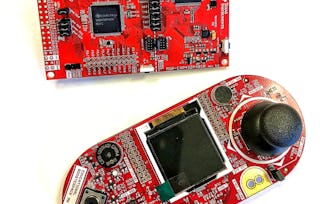
Advanced Architectures in Embedded Software Design is an intermediate-to-advanced course built for engineers who want to architect embedded systems that are modular, scalable, and resilient in real-world deployments. Whether you’re working on IoT devices, industrial controls, robotics, or wearables, success depends on your ability to build software that can evolve with hardware, support real-time responsiveness, and operate within tight power and memory constraints.

Advanced Architectures in Embedded Software Design

位教师:Hurix Digital
访问权限由 New York State Department of Labor 提供
您将获得的技能
- Embedded Systems
- Interoperability
- Performance Tuning
- Software Architecture
- Maintainability
- Software Systems
- Real-Time Operating Systems
- Software Design Patterns
- Software Design
- Scalability
- Secure Coding
- Safety Assurance
- Systems Architecture
- Application Design
- Real Time Data
- Embedded Software
- Design Strategies
- 技能部分已折叠。显示 10 项技能,共 17 项。
要了解的详细信息
了解顶级公司的员工如何掌握热门技能

该课程共有3个模块
In this opening lesson, you'll dive into the foundational principles that shape efficient embedded systems design. We’ll explore how Real-Time Operating System (RTOS) integration enables precise task scheduling and responsiveness, laying the groundwork for scalable, reliable applications. You’ll also examine low-power design strategies that extend battery life and reduce energy consumption which is critical for modern IoT and mobile devices. Finally, we’ll unpack memory optimization techniques that help you improve maximum performance out of limited resources, balancing speed, size, and stability.
涵盖的内容
3个视频2篇阅读材料1个作业
In this lesson, you’ll explore how reusable code structures and multi-threading can dramatically improve the efficiency, scalability, and maintainability of your software. You’ll learn how modular design patterns—such as function libraries, object-oriented components, and template-based logic—allow developers to write once and deploy often, reducing redundancy and simplifying updates across projects. Then, you’ll dive into multi-threading: the art of running concurrent tasks within a single application. Whether you're managing sensor input, UI responsiveness, or background data processing, multi-threading helps you maximize performance and responsiveness without overloading system resources.
涵盖的内容
1个视频1篇阅读材料1个作业
In this final lesson, you’ll step into the high-stakes world of safety-critical systems, where failure isn’t just inconvenient—it can be catastrophic. You’ll explore inter-process communication (IPC) techniques that allow isolated components to share data securely and efficiently, even under strict timing constraints. You’ll also examine the architectural and regulatory considerations that guide safety-critical design, including fault tolerance, deterministic behavior, and certification standards.
涵盖的内容
2个视频1篇阅读材料3个作业
位教师

提供方
人们为什么选择 Coursera 来帮助自己实现职业发展

Felipe M.

Jennifer J.

Larry W.

Chaitanya A.
从 Computer Science 浏览更多内容

University of Colorado Boulder

University of Colorado Boulder

28DIGITAL
¹ 本课程的部分作业采用 AI 评分。对于这些作业,将根据 Coursera 隐私声明使用您的数据。