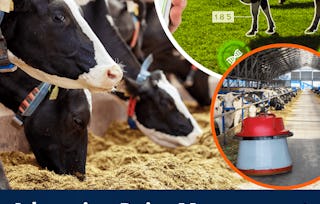
The agriculture industry is on the verge of a digital revolution that will transform various farming practices, from land preparation to harvesting and pest control. This revolution includes the use of advanced machinery like driverless tractors and harvesters, as well as automated systems for milking and feeding livestock. The ongoing technological advancements and integration of automation have the potential to profoundly affect both the economic and social aspects of rural communities. This includes the creation of new jobs and the displacement of traditional production roles. While automation and robotics hold promise in addressing sustainability challenges, their impact on the agricultural workforce remains uncertain. The interaction between humans and robots in agriculture gives rise to concerns about occupational safety and health that require attention for the well-being of the workforce.

Safety & Community Implications of AI in Agriculture
通过 Coursera Plus 提高技能,仅需 239 美元/年(原价 399 美元)。立即节省

您将学到什么
Understand the safety challenges, risks, and industry standards shaping the use of autonomous and AI-driven technologies in agriculture.
Explore how risk assessment methods and current research contribute to safer machine design, AI systems, and agricultural work environments.
Examine the broader impacts of automation and AI on agricultural labor markets, future technologies, and issues such as data bias.
您将获得的技能
- Safety Standards
- Automation
- Data Ethics
- Accident Prevention
- Risk Management Framework
- Hazard Analysis
- Mitigation
- Emerging Technologies
- Occupational Safety and Health Administration (OSHA)
- Sustainability Standards
- Artificial Intelligence
- Law, Regulation, and Compliance
- Robotics
- Socioeconomics
- Data Collection
- Social Sciences
- Responsible AI
- Injury Prevention
要了解的详细信息

可分享的证书
添加到您的领英档案
最近已更新!
December 2025
作业
5 项作业
授课语言:英语(English)
了解顶级公司的员工如何掌握热门技能

该课程共有4个模块
位教师


从 Mechanical Engineering 浏览更多内容

EDUCBA
University of Illinois Urbana-Champaign
Coursera

Fred Hutchinson Cancer Center
人们为什么选择 Coursera 来帮助自己实现职业发展

Felipe M.
自 2018开始学习的学生
''能够按照自己的速度和节奏学习课程是一次很棒的经历。只要符合自己的时间表和心情,我就可以学习。'

Jennifer J.
自 2020开始学习的学生
''我直接将从课程中学到的概念和技能应用到一个令人兴奋的新工作项目中。'

Larry W.
自 2021开始学习的学生
''如果我的大学不提供我需要的主题课程,Coursera 便是最好的去处之一。'

Chaitanya A.
''学习不仅仅是在工作中做的更好:它远不止于此。Coursera 让我无限制地学习。'
